If your radiators are hot at the top but remain cold at the bottom, it usually means there is an issue with your central heating system. The good news is that this problem is quite common and often easy to fix. Before calling a professional, there are several simple checks you can safely carry out yourself to try to solve the issue.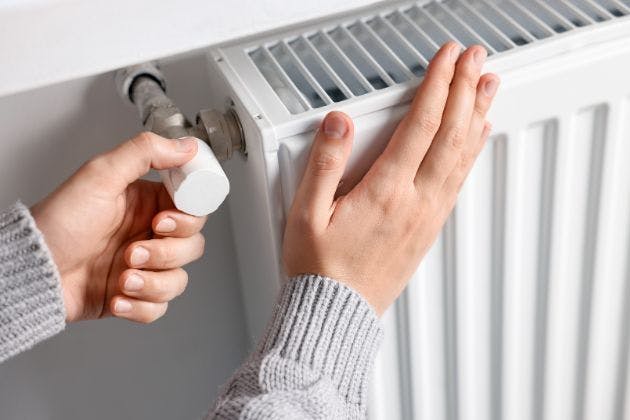
Typical reasons radiators are cold at the bottom
Radiators should heat fairly evenly from bottom to top. When they stay cold at the bottom, it almost always comes down to circulation problems inside the system. In many homes, the main culprit is sludge or magnetite, which is a build-up of rust and debris that collects in the bottom of radiators and pipework.
Other times, the issue is that water is not flowing properly because of incorrectly set valves, poor system balancing, or a struggling pump. In harder water areas, limescale can also add to the problem by narrowing pipes and causing kettling noises around the boiler.
Safe, simple checks you can do yourself
Before you start adjusting valves or bleeding every radiator, it is worth doing a few quick, safe checks. Always let radiators cool before working on them, and have an old towel and container handy if you are going to bleed any.
Check TRVs and lockshield valves: Make sure the thermostatic radiator valve (the numbered head) is turned up and the small lockshield valve at the other end is not fully closed.
Feel the radiator top and bottom: If it is hot at the top and cold at the bottom, sludge is more likely than air. If it is cold at the top, air may be trapped.
Bleed radiators if the top is cold: Use a radiator key to slowly release air until water flows in a steady stream, then close the vent.
Check boiler pressure: On most systems, the pressure gauge when cold should be around 1 to 1.5 bar. If it is very low, consult your boiler manual for topping up.
After bleeding radiators, always recheck the boiler pressure. Topping up too often or losing pressure again quickly could indicate a leak that needs an engineer.
Sludge and magnetite build-up in radiators
Sludge is a thick, dark build-up made from rust, dirt and tiny particles from inside your heating system. Over time, it sinks to the bottom of radiators and stops hot water from circulating properly, which is why the top warms up while the bottom stays cold.
Signs you might have sludge issues include some radiators heating much more slowly than others, gurgling or trickling noises, and radiators that cool quickly once the heating goes off. A heating engineer can take a small sample of water from your system and quickly tell if sludge is present.
In many cases, a chemical clean or powerflush will be recommended to remove this build-up so heat can circulate properly again.
Balancing issues and partially closed valves
Even when there is little or no sludge, your radiators can still heat unevenly if the system is not properly balanced. Balancing is the process of adjusting the lockshield valves so that every radiator receives a fair share of hot water.
If radiators near the boiler are roasting while those further away are lukewarm, your system may need balancing. This is usually best done by an engineer with temperature readings, although you can make small adjustments yourself by opening cooler radiators slightly more and closing very hot ones a tiny bit.
Partially closed or stuck valves can also restrict flow. If a thermostatic radiator valve head is damaged or stuck, the radiator may never reach full temperature. An engineer can replace faulty TRVs or lockshields if needed.
Circulation problems and system-wide issues
If most or all radiators are affected, or they all take a very long time to heat up, the problem may be more than just one clogged radiator. A weak or failing pump, blocked pipework or serious sludge throughout the system can all affect circulation.
In some cases, an undersized or ageing boiler may struggle to supply enough heat to a larger property, especially if extra radiators have been added over the years. In hard water areas, scale inside the boiler and primary heat exchanger can reduce efficiency and cause kettling noises, making circulation issues worse.
When several radiators are cold at the bottom, and DIY checks do not help, it is time to have the whole system assessed by a Gas Safe registered engineer.
What a power flush is and when it may be recommended
A powerflush is a professional cleaning process that uses a powerful pump and specialised chemicals to circulate at higher flow rates through your heating system. The aim is to loosen sludge, rust and debris, then flush it all out to leave pipework and radiators clean inside.
Engineers often recommend a powerflush if you have multiple radiators cold at the bottom, repeated cold spots after bleeding, dirty system water, noisy boiler operation or frequent pump issues. It is also commonly done before fitting a new boiler to help protect the new appliance from old sludge.
After a powerflush, it is good practice to add inhibitor chemicals and, where suitable, a magnetic filter to help catch future debris and keep the system running efficiently.
When to stop and call a heating engineer
Some checks are perfectly safe for most homeowners, but there are clear points where you should stop and get expert help. You should contact an engineer if any of the following apply:
You see water leaking from any radiator, valve or pipework
The boiler keeps losing pressure or shows error codes
You hear loud banging, clunking or kettling sounds from the boiler
You smell gas or suspect a ventilation issue
Most radiators are affected and DIY steps have not improved things
Boiler internals, gas valves and electrics are not DIY jobs and must be handled by a qualified professional for safety and to protect your warranty.
FAQ: common questions about radiators cold at the bottom
Is it safe to keep the heating on?
If one or two radiators are slightly cooler at the bottom but the system is otherwise working normally and there are no leaks, it is usually not an immediate safety risk. However, it is inefficient and can strain the boiler, so it is best to address the cause rather than ignore it.
If you notice leaks, odd smells, frequent boiler lockouts, or very loud noises, turn the system off and call an engineer.
Will bleeding fix it?
Bleeding helps when the top of the radiator is cold because air has collected at the top, pushing hot water down. If your radiator is hot at the top and cold at the bottom, bleeding alone rarely fixes it because sludge, not air, is usually to blame.
In that case, cleaning, powerflushing or other remedial work is normally needed to restore full heat across the radiator.
How do I know if it is sludge?
Typical sludge symptoms include radiators that are cold or cool at the bottom, patchy heating across different rooms, and very dark or dirty water if you briefly open a bleed valve. You may also hear trickling or gurgling sounds as water tries to move past the build-up.
An engineer can confirm sludge by checking water samples and temperature patterns. If sludge is present, they can advise whether a chemical clean, powerflush, or targeted radiator replacement is the best next step.
Keeping your heating efficient and the next steps
Radiators cold at the bottom are not just an annoyance; they are also a sign that your system is wasting energy and may be putting extra load on your boiler. Regular boiler servicing and system checks help catch sludge build-up, pressure issues and failing components before they cause bigger problems.
If you are in Milton Keynes, Bletchley or Newport Pagnell and your radiators are not heating properly, contact B.Brill Plumbing & Heating LTD to book a boiler or central heating repair visit, or schedule a service to keep everything running efficiently. Call 01908410370 for friendly, professional advice.