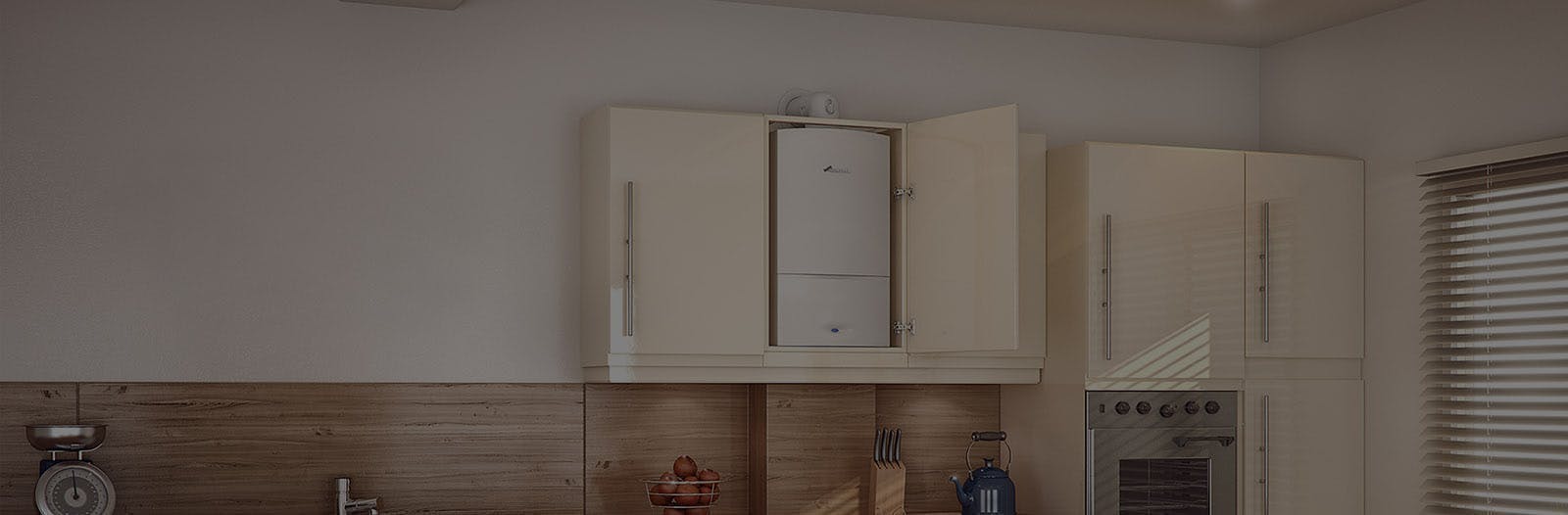
If your boiler has power but won’t fire up, it can be frustrating and stressful—especially during cold weather when you need heating and hot water the most. The good news is that many common causes are simple to check yourself. Understanding these symptoms can help you identify the problem quickly and give you the right information when you call a Gas Safe engineer. Acting fast means you’ll stay warm and avoid costly damage or breakdowns.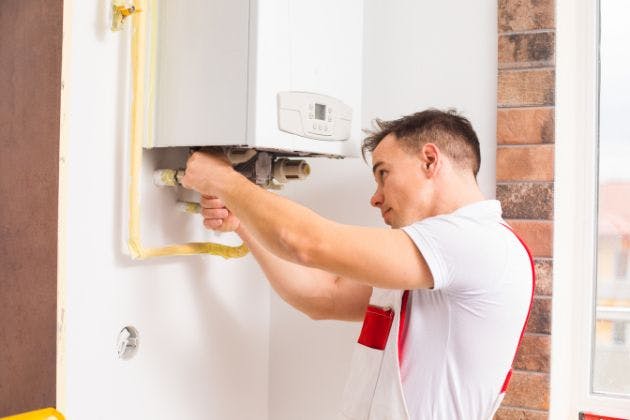
First check: what exactly is not working?
Before you do anything else, work out which of these best matches your situation. It will guide what to check and what to tell an engineer.
No hot water, but heating works: most common on combi boilers and often a controls or internal component issue.
No heating and no hot water: usually a system-wide problem such as pressure, lockout, or a safety device.
Boiler tries to start, then cuts out: intermittent firing or cycling that may point to a more complex fault.
Make a quick note of what you can and cannot get from the boiler. That information is very useful later if you need to call B.Brill Plumbing & Heating LTD.
No hot water only: common combi boiler issues
If your radiators get hot but your taps only run cold, the boiler is at least partly working. On combi boilers, the hot water is produced directly when you open a tap, so certain issues only show up on hot water.
Check hot water controls and settings
Some boilers and controls have separate settings for heating and hot water. Make sure:
The programmer or timer has hot water set to "on" or "timed" at the moment you are testing. If there is a hot water temperature knob on the boiler, check it has not been turned right down. Also check that any eco mode has not changed how the boiler responds to brief tap openings.
Flow rate and tap behaviour
Combi boilers need a minimum water flow to fire. If you just crack the tap slightly, the boiler may not detect the demand and will not ignite. Try fully opening a hot tap and waiting a few seconds.
If the boiler only fires for some taps but not others, there might be an issue with a particular mixer tap or a partially blocked filter, and you will need an engineer to investigate.
When you will need an engineer for hot water issues
If controls and settings look fine yet you still have no hot water, the fault could be inside the boiler. On a combi this might be a sensor, diverter valve, or flow switch problem, which are not DIY jobs.
At this stage, note any fault code showing, and contact a Gas Safe engineer to diagnose the exact cause and quote for repair.
No heating and no hot water: safe basic checks
If the boiler will not fire for either heating or hot water, focus on simple external causes first. These are safe checks any homeowner in Milton Keynes, Bletchley or Newport Pagnell can carry out.
Thermostat and programmer settings
Room thermostats and programmers often get knocked, updated, or reset by a power cut. Make sure your thermostat is:
Set higher than the current room temperature, normally at least 21°C when testing. In "heat" or "auto" mode rather than "off". If it is wireless, check for low battery warnings and replace batteries if needed, then try again.
On your programmer or smart controls, confirm the boiler is not simply outside a timed "on" period. Try setting heating and hot water to "on" continuously for an hour while you test.
Check boiler pressure on sealed systems
Most modern systems have a pressure gauge on the front of the boiler. When cold, it should typically sit around 1.0 to 1.5 bar. If it has dropped below about 0.8 bar, the boiler may refuse to fire to protect itself.
If your manufacturer instructions show you how to top up pressure using the filling loop, you can usually bring it back into range yourself. Do this slowly, with the boiler off, and do not exceed the recommended level. If the pressure keeps dropping, there is likely a leak or expansion issue that needs professional attention.
Frozen or blocked condensate pipe symptoms
In cold weather, a very common cause of a boiler not firing is a frozen condensate pipe. This is the plastic pipe (often white or grey) that takes waste water from the boiler to a drain. If it freezes or blocks, the boiler will lock out for safety.
Typical signs include gurgling from the boiler, repeated attempts to start followed by a lockout, or an error code related to condensate or drainage. Outside, you might see ice on the pipe or hear it creak.
If it is safe to access, you can try gently thawing the external section of pipe with warm (not boiling) water or a hot water bottle, then reset the boiler once thawed. If you are unsure, or it keeps happening, it is wise to get a heating engineer to look at insulating or rerouting the pipe.
Intermittent firing and boiler cycling
Sometimes the boiler will fire, run for a short time, then cut out and repeat the cycle. This can leave you with lukewarm radiators or hot water that goes cold too quickly.
Short cycling can be linked to faulty sensors, circulation problems, incorrect system design, or blocked pipes and filters. It can also be made worse by oversized boilers in small properties.
There are very limited safe checks a homeowner can do here, beyond making sure radiators are bled and all valves are open. If your boiler is cycling, especially with error codes or lockouts, it is time to book a professional diagnosis.
What boiler error codes can tell you?
Modern boilers display a fault code or flashing light sequence when something is wrong. These codes are brand-specific, but they usually relate to categories such as ignition failure, flame loss, fan or air issues, pressure problems, sensor faults, or condensate and flue issues.
You do not need to decode it yourself. Simply note the exact code or pattern and have it ready when you speak to an engineer. It helps us arrive with the right parts and tools, which can reduce time and cost.
Safety first: when to stop and call a Gas Safe engineer
While basic checks are fine, some signs mean you should stop resetting or testing the boiler and get urgent professional help. Safety must come before getting the heating back on.
Smell of gas around the boiler, meter, or pipework.
Signs of carbon monoxide risk, such as headaches, dizziness, or a CO alarm sounding.
Scorch marks, sooting, or melted plastic on or near the boiler or flue.
Boiler needs constant resetting to run for only short periods.
If you smell gas, turn off the gas at the meter if you can safely, open windows, do not use naked flames or switches, and call the National Gas Emergency number immediately. Then contact a local Gas Safe engineer to inspect and repair the system.
What we will ask you on the phone
When you call B.Brill Plumbing & Heating LTD for a boiler that will not fire, a few details help us diagnose the issue more quickly and prepare for your visit. Having this ready can save time.
We will usually ask for:
Make and model of the boiler. You can often find this on the front panel or a data plate under the boiler. A quick photo can help.
Pressure reading (if there is a gauge). Let us know what the needle is pointing to when the system is cold, and whether it has been dropping.
Any fault or error codes on the display, including whether they are flashing or solid.
When the problem happens. For example, only with hot water, only with heating, only first thing in the morning, or after strong wind and rain. Mention if you have had recent work done to the system.
Sharing this information helps us work out if you need urgent attendance and whether parts may be required, reducing the chances of repeat visits.
Next steps: repair now and reduce future breakdowns
If your boiler in Milton Keynes, Bletchley or Newport Pagnell will not fire up, and you have tried the simple checks above, the safest next step is to book a professional inspection. Persistent faults, pressure loss, repeated lockouts, or any safety concerns all point to an underlying issue that will not fix itself.
The team at B.Brill Plumbing & Heating LTD can diagnose ignition problems, pressure faults, sensor issues, and more, then carry out safe, long-lasting repairs. We will always explain your options clearly before any work goes ahead.
To cut the risk of future breakdowns, it is sensible to book regular boiler servicing. A yearly service helps keep components clean, checks safety devices, and can pick up small issues before they cause a full loss of heating or hot water.
If you are currently without hot water, you may also find it helpful to read our related guide on no hot water problems for more targeted advice. When you are ready to get your system checked, call B.Brill Plumbing & Heating LTD on 01908410370 to book a boiler repair visit and get your home warm and comfortable again.