
Good heating control is one of the simplest ways to stay comfortable while keeping gas bills under control. Many homes around Milton Keynes now have either a smart thermostat, thermostatic radiator valves (TRVs), or both, but it is not always clear which does what, or which should be upgraded first.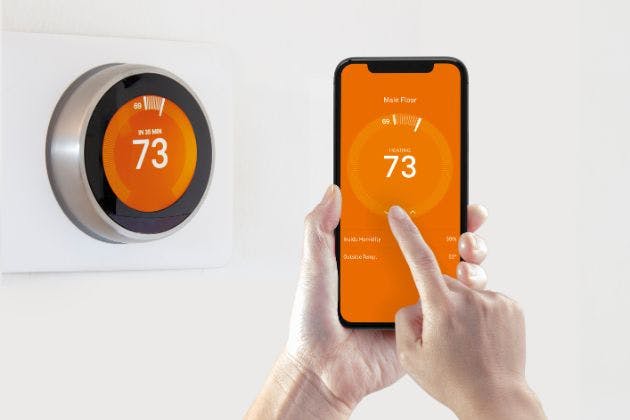
Smart thermostat vs TRVs: what each one actually does
A smart thermostat replaces a standard wall thermostat and programmer. It tells the boiler when to turn on and off, and in some cases how hard to work, often using an app or schedules you set on your phone.
TRVs sit on the side of individual radiators and control the flow of hot water into that radiator. They react to the air temperature in that room, so they are about local comfort rather than controlling the boiler itself.
Smart thermostat: overall control of the boiler and timing
Basic TRVs: room-by-room temperature limiting, no signal to the boiler
Smart TRVs: room controls that can send information back through a smart system
A common misunderstanding is that fitting TRVs alone will “tell the boiler there is enough heat”. Standard TRVs do not talk to the boiler; they simply reduce water flow through that radiator once the set temperature is reached.
How they work together in real homes
In a typical set-up, the smart thermostat is the “boss”. It decides when the boiler runs based on your schedule and temperature setting in the main room or hallway. TRVs then fine tune comfort in individual rooms.
If you add smart TRVs as part of a compatible zoning system, they can send information back to a central hub, which then controls the boiler more intelligently. This allows proper zoning, where only the rooms that need heat are calling the boiler to run.
Without a smart thermostat or hub, TRVs are still useful, but they can only restrict heat locally. Your boiler may continue to fire until the main thermostat is satisfied, even if most rooms are already comfortable.
Choosing the right control for your type of home
Smaller flats and compact homes
In a one-bedroom flat or a small two-bed house, a good smart thermostat is usually the best first upgrade. Because the space is small, rooms tend to heat up at a similar rate, so full zoning often adds limited extra benefit.
Here, a smart thermostat with clear scheduling and geofencing (turning the heating down when you leave) can save energy without complicating things. A few well-set TRVs in bedrooms and the lounge can help avoid hot spots.
Larger and multi-room properties
In bigger homes around Milton Keynes, Bletchley and Newport Pagnell, rooms are often used very differently. You might want the living room warm in the evening, bedrooms cooler at night, and a home office comfortable in the day.
This is where a combination of a smart thermostat and TRVs really comes into its own. The smart thermostat controls boiler operation, while TRVs reduce heat to spare bedrooms, hallways and unused spaces so you are not paying to heat every radiator at once.
Households with varied schedules
If some people are home all day while others are out, a simple on/off timer quickly becomes frustrating. You either end up too cold or heating an empty house.
A smart thermostat lets you set more detailed schedules or adjust things remotely on your phone. Adding smart TRVs or well-set manual TRVs can help ensure home workers, children and shift workers each get the comfort they need in the rooms they use most.
Dealing with comfort issues like hot bedrooms
Overheated bedrooms and chilly lounges are usually a sign that heat is not being balanced properly. Radiators nearest the boiler often get hottest, and rooms with little insulation may always feel colder.
TRVs are particularly helpful here. Setting bedroom TRVs a notch lower and ensuring the lounge TRV is working correctly can even things out. A smart thermostat then avoids overshooting by turning the boiler off at the right time rather than running flat out.
Installation, compatibility and boiler types
Most modern gas boilers, including combi and system boilers commonly installed in Milton Keynes, can work with smart thermostats. The key question is how the thermostat talks to the boiler.
Many older systems use simple on/off control. More advanced controls use a form of modulation, similar in concept to OpenTherm, which lets the boiler vary its output instead of always running at full power. This can improve comfort and efficiency if both the boiler and control are compatible.
Smart thermostats may be wired directly where the old thermostat was, or use a wireless receiver near the boiler. Choosing between the two depends on existing wiring routes, safe access, and how your current controls are arranged.
Because every home is different, it is sensible to have a heating engineer assess:
Your boiler type and age
Existing wiring centres and control boxes
Location of the main thermostat and TRVs
Any past issues like short cycling or radiators not heating
If your controls are unresponsive or radiators do not heat as expected, it may be worth a central heating repair visit before, or alongside, adding new smart kit.
Practical decision guide: what to do next
You can use this simple decision path to plan your next step:
If you have no smart controls at all: start with a reliable smart thermostat that suits your boiler. This gives you better scheduling, remote control and a solid base to add TRVs later.
If you already have a smart thermostat but no TRVs: fit or check manual TRVs on all radiators except the one with the main thermostat. If comfort is still uneven, consider upgrading to smart TRVs in key rooms.
If some rooms never feel right: have a heating engineer check radiator sizing, balancing and existing TRVs. A service visit can also be a good time to arrange boiler servicing so the whole system is checked over.
If your boiler is older or unreliable: focus first on getting the system running properly before investing heavily in new controls. There is little benefit in advanced controls on a boiler that keeps breaking down.
Getting tailored advice in Milton Keynes, Bletchley and Newport Pagnell
Every property and family routine is different, so the best heating control set-up is rarely one-size-fits-all. The right mix of a smart thermostat and TRVs can improve comfort and reduce wasted heat, but only if it is matched to your boiler and the way you use your home.
If you would like expert help choosing and installing a smart thermostat, or you are unsure how TRVs should be set up in your rooms, B.Brill Plumbing & Heating LTD can assess your current controls, boiler and pipework, then recommend a sensible upgrade path. To discuss smart thermostat options or book a visit, call B.Brill Plumbing & Heating LTD on 01908410370 or enquire via our smart thermostat installation service page on the website.